Saturday, 4 October 2014

GENOTYPE MATCHING BEFORE MARRIAGE: WHEN LOVE ISN'T EVERYTHING!


Musician Keith Sweat once said, "There's a difference between who we love, who we settle for, and who we're meant to be with." I think I agree with him here!

At times  in a relationship we eventually settle for someone out of rational behaviour or the possible effect of what the union could produce, and not solely out of love and emotional chemistry. From time immemorial, marriages have taken place out of other reasons and not just out of feelings or love alone. When it comes to marriage, people had always considered the possible effect of a marriage, even before considering the marriage itself. Someone may be married for his or her wealth, for his or her family status, for his or her looks and for his or her piety. People go into marriages not only just because of love or emotional chemistry. It could be to cement family ties or to cement friendship between families. It could be because of fame or the other person's social status. It could be because of the other person's physical appearance or looks. It could be as a result of religious compatibility. It could be on health grounds or simply because the other person is a good care giver. In recent times, blood or genotype compatibilty has become the norm before considering marriage.

Today, it is wise for you and your partner to find out what your blood genotype is, long before you even consider marriage. Your blood genotypes are inherited through the contributions from your father and mother.

And just for the case of mentioning genotypes, you could have:

- Regular Genotype: AA (healthy as healthy can be).

- Traits: AC, AD, AF, AG, A+FAST, AE and AS (not associated with any clinical signs, symptoms or syndromes - they are as relatively as healthy as AA).

- Genotypes associated with clinical features: SS, SC, CC (are associated with clinical signs, symptoms and syndromes).

People with SS genotype are those with sickle-cell anemia syndrome commonly known as (sickler).

The bottomline here is to avoid a combination which could result into offsprings with SS, SC and CC genotypes. These children would suffer because of the severe health conditions associated with such genotypes.

Now let's do the calculations with you and your partner based on the four common genotypes amongst people from the negroid race:

You + your partner= your children

AA + AA= all AA i.e 100% AA children
AA + AS= 75% AA and 25% AS children
SS + AS= 75%SS and 25%AS children
SS + SS=100% SS children
AA + SS=100%AS children.
AS + AS= 50% AS, 25% AA and 25%SS children.

Of course there are many cases where AS couples had up to five or six children without a single sicklier among them. But why risk it? What if you're not so lucky? Can you forgive yourself when you end up having a child with the sickle cell disease and put the child through the agony the disease brings when you could have easily avoided it? Of what benefit is it to bring a child to the world to come and suffer?

We shouldn't let our search for happiness affect other people's happiness, particularly the happiness of our offsprings. That would amount to selfishness on our own part. A child has every right to be healthy and happy, and no child would be happy with you in the future if he or she discovered your choice in life was his or her own source of unhappiness or ill health.

Thursday, 2 October 2014

HISTORY OF THE YORUBA CIVIL WARS (1877-1893)

Although the Yoruba Civil War was mainly between Western Yoruba (Ibadan and its allies like the Offa, Modakeke and all Oyo forces on Ibadan's side) and Eastern Yoruba (Ijesa, Ekiti, Ife and other Yoruba dominions like Igbomina, Akoko, Egbe, Kabba and the Oworro, a Yoruba sub-tribe in Lokoja, Kogi State); Ibadan was also fighting on four other fronts, making it five fronts, during this civil war.

The first encounter between Ibadan and the Eastern Yoruba forces was between it and Ekiti tagged Ogun Jalumi (battle of waterloo) which ended in ignominy for the Ekiti soldiers. The Jalumi War, also called the Battle of Ikirun, was a battle that took place on 1 November 1878 in the north east of present-day Osun State, Nigeria. It was part of the larger conflict named the Ibadan War or Ekiti-Parapo War. The forces of Ibadan defeated in detail a force of rebellious Yorubas including soldiers from Ilorin, Ekiti, Ila and Ijesa.

It was this defeat that prompted the Ekiti to call on Ogedengbe, a tall, fiery fellow, with shooting eyeballs of Ijesa stock, who had been reluctant to lead the Ekiti-Parapo, having himself had his military training in counter insurgency and infantry at Ibadan, and was wary of leading his people against his benefactors.

Ogedengbe subsequently agreed to lead the Ekiti Parapo War, which also enlisted several Yoruba dominions like Igbomina, Akoko, Egbe, Kabba and the Oworro, a Yoruba sub-tribe in Lokoja, Kogi State. Also, Lagos, Ijebu and Egba were said to have assisted Ekiti Parapo against Ibadan, seen by all, as a common threat to the commonwealth. The Ekiti War generals also held several nocturnal meetings where war strategies were reviewed and perfected. Ilara Mokin in Ondo State was said to have been the headquarters of the Ekiti Parapo secret service.

One source claimed Ibadan Generals were so clever that they would allow Ekiti to capture their women who would bear children for the captors but later spy on them. Several accounts speak of discipline on both sides, especially as regards the treatment of women, children and even prisoners of war.

The Ibadan War or Ekiti-Parapo War was a long bitter war between a terrifying Ibadan military might and other Yoruba sub-tribes tagged Ekiti-Parapo. The War was an epic and chronic civil war between two powerful Yoruba confederate armies of mainly Western Yoruba (Ibadan and its allies like the Offa, Modakeke and all Oyo dominions on the side of Ibadan) and Eastern Yoruba (Ijesa, Ekiti, Ife and other Yoruba dominions like Igbomina, Akoko, Egbe, Kabba and the Oworro, a Yoruba sub-tribe in Lokoja, Kogi State). It is said that the war lasted for about 16 years with heavy casualties on both sides although historians believe that the losses were even. It is on record that the remote cause of this war was the collapse of the Oyo empire, while the immediate cause was the domineering stance of the Ibadan military output on Yoruba towns and cities; in other words, the immediate cause was revolt against Ibadan's desire to rule over other towns in Yoruba country following the decline of Oyo empire.

Before Ibadan's encounter with the Eastern Yoruba forces it had already become involved in yet another war over trade with Egba and Ijebu in 1877, when Ibadan traders on their way from Porto Novo with firearms were attacked by the Egba. Ijebu declared war against Ibadan in 1877. This gave the Ekiti and the Ijesa their chance. Ijesa and Ekiti taking advantage of this war, declared their independence in 1878. This revolt against Ibadan rule in 1878 started with the massacre of Ibadan officials in Ijesa, Igbomina and Ekiti. This led to a war which dragged on for sixteen years.

Eventually, Ibadan found itself fighting on five fronts. First, in the south against the Egba who confined their activities to raids and surprise attacks; secondly, against the Ijebu, in the same south, who pitched a camp against them at Oru under Balogun Onafowokan; thirdly the main war at Kiriji in the east, where their forces fought a long battle against  the Ekiti and Ijesa (Ekiti-Parapo forces) under the command of Ogedengbe, the Seriki of Ijesa; fourthly at Offa in the north, where they faced the Ilorin Fulani who pitched their camp against the people of Offa; and finally at Ile-Ife where the Ife people joined the alliance against them in 1882. There had long been friction between the Ife and the Oyo settlers at Modakeke. These animosities were strengthened by the war during which Ife itself was sacked by the Modakeke and their Ibadan allies, and Modakeke was sacked by the Ife and Ekiti.

Although Ibadan was fighting on five fronts, the main action of the war, however, took place in the north-east. The Ibadan and Ekiti-Parapo forces faced each other at Kiriji, a few miles east of Ikirun. Control of the trade routes was a major issue. There were three main routes to the interior, via Egba, Ijebu and Ondo. The Ondo route had been opened up by the British because of the frequent closure of the other roads. During this war, it became the main supply route for both sides (Akintoye, 1969). Some Ibadan supplies were able to get through via Ijebu. The war was unpopular with Ijebu traders, and the Awujale was forced into exile in 1885. Despite this, the flow of supplies was not completely free. Ijebu traders' profit margins were high, and they retained strict control of trade through the kingdom (Johnson, 1921: 610-11).

After some initial reverses, the Ekitiparapo gained something of an advantage in the conflict, and the help they received from Ekiti Saro merchants in Lagos was crucial. The most important factor was the supply of breech-loading rifles, much more accurate than the arms being used by the rest of the Yoruba, though the Ibadan were later able to get a small supply of them as well (Akintoye, 1971: 119).

Ibadan suffered so much set-backs in these wars not only because the Ekiti-Parapo were better equipped with larger supplies of the much more accurate breech-loading rifles but also because it had to fight on five fronts and probably because none of the Oyo forces on Ibadan's side actually wished it well. This was partly because of their sufferings under Ibadan's control, and partly because of the arrogant attitude of Are Latosa who, under normal circumstances as head of the town, would not have gone to the battlefield. He was eventually killed at Kiriji.

The failure of Oyo to provide military defence for the Oyo people from the onslaught of the Fulani at Ilorin, had pushed Ibadan into a position of prominence among the towns that succeeded the Oyo empire; it had in consequence wrested effective power from Oyo, but was unable to secure general acceptance as the dominant force in Yoruba country.

Within the Oyo community, where the Alafin's control had been virtually complete, Ibadan's overbearing attitude and the alienation of the Alafin's support had weakened its control, whilst within Yoruba country the fact that it was an upstart town whose real ruler was the Alafin had made it difficult for it to achieve the former prestige of Oyo empire. Moreover, its inability to reach a modus vivindi with the rest of Yoruba country, and its obvious military character led them to combine against it.

However, in spite of Ibadan's disadvantages and set-backs in these wars, these five forces could not effect its defeat. A state of stalement was reached, from which only the intervention of an outside force could redeem the whole Yoruba country. The intervention of the British government of Lagos in the interest of trade in the period of the 'Scramble' saved the day.

Before the war eventually came to an end, attempts at mediation had started as early as 1879-80. Both the Alafin and the Oni were involved, but neither was trusted by both sides, and Ife later joined in the fighting. The Lagos government was under instructions from London and Accra to keep out of the conflict, even though the fighting was having serious effects on the economic life of the colony. Under commercial and mission pressure, the Lagos government attempted to mediate but was rebuffed, and from 1882 to 1884 the British did nothing. Attempts by Saro in Lagos and by the Fulani emirs to end the conflict also failed.

After 1885 the attitude of the administration started to change. Firstly, there was the changing political status of Lagos which was separated from the Gold Coast in 1886. Secondly, the scramble for Africa by the colonial powers was well under way, and there were fears of French interference. Thirdly, some of the main protagonists of the war were themselves getting tired of it (Akintoye, 1971: 176).

To negotiate a peace, the administration turned to the CMS. A ceasefire was arranged in 1886 through the efforts of Samuel Johnson, the historian, and Charles Phillips, later the Bishop of Ondo. The parties then signed a treaty in Lagos with Governor Maloney which provided for the independence of the Ekitiparapo towns and the evacuation of Modakeke, to suit Ife,. This proved impossible to carry out. Ilorin refused to stop fighting in the north where it was besieging Ofa. Thus the war dragged on, and the forces refused to disband (Akintoye, 1971: 181-4).

British fears of the French soon appeared justified. There was the curious incident of 1888 when an employee of a French company persuaded the Egba chiefs to sign a treaty with France, providing for the construction of a rail link with Porto Novo (Ayandele, 1966: 49-51). This was a direct threat to trade with Lagos, but the French refused to ratify the treaty. The two powers hastily agreed on a frontier in 1889 (Anene, 1963). The areas recently invaded by Dahomey fell within the French sphere of influence. The British moved into the interior with the establishment of a post at Ilaro in 1890, while the French invaded Dahomey in 1892.

More aggressive measures to extend British control in the interior came with the arrival of Governor Carter in 1891. Like Glover, he took the view that the key to the situation lay in control of the trade routes through Ijebu and Egba. The result was the Ijebu expedition of 1892 (Ayandele, 1966: 54-69; Smith, 1971b). Ayandele suggests that in fact the Ijebu had showed more willingness to open the road than the Egba, but the decision to attack Ijebu was based partly on the hostility of the missions: unlike Egba, Ijebu had never allowed them in. The impact of the expedition was considerable. In 1893, Carter was able to set off on a tour around Yorubaland, making treaties with Oyo and Egba, and finally persuading the Ibadan and Ekitiparapo forces to disperse. The Egba opened the road to Ibadan, and allowed the start of railway construction. After two final incidents, the bombardment of Oyo in 1895 (Ayandele, 1967) and the capture of Ilorin by the Royal Niger Company in 1897, effective colonial control was established throughout most of Yorubaland

PART II: Word of mouth (viva voce)
Even though stories about the wars are fading like stars at dawn, yet, for those Yoruba people who witnessed the war, September 23 is not just statistics, but a date that leaves an enduring footprint. If you are in doubt, Pa Omiekun Adekunle (92 years old as at the time he was visited by Vanguard Newspaper reporter Adewale Adeoye in 2011) serves as a living pathway to the rediscovery of one of history’s most chilling story of brutal repression by a once dominant and awe-inspiring Ibadan Empire and the heroic resistance of a people against a superior force, that was later brought on its knees, through share determination, bravery and valour.

Though Pa Adekunle was not a soldier in the Ekiti Parapo War, between a terrifying Ibadan military might and other Yoruba sub-tribes tagged Ekiti-Parapo, his father was a marksman in the Yoruba civil war that lasted for 16 years, and Pa Adekunle said he holds on his palms the “raw, true account of the war” as handed over to him by his father. Vanguard Newspaper reporter Adewale Adeoye visited his village in 2011, Irele-Ekiti, a small community surrounded by lurch green mountains and rocky hills, located North east of Ikole-Ekiti.

The community of mainly agrarian locals played a critical role on the side of the allied forces. According to Pa Adekunle (in Adewale Adeoye's report), “My father played a significant role in Kiriji War, my uncle also belonged to the secret service in the war.” In that particular report by Adewale Adeoye, Pa Adekunle was reported to have said his people fought for 16 years, in one of the longest wars history has ever encountered. "We fought with determination to free the entire Yorubaland from the domineering influence of a unitary government led by Ibadan”, he added, pointing to a mountain top in the center of the village where thousands of military officers of Ibadan origin were said to have been massacred and later buried. He said that in the 1930s, the skeletal remains of the soldiers could still be found littering the mountain top. Palaake was the name of the military commander said to have led the uprising around 1780 against the Ibadan invasion.

What does Kiriji mean and what really is the significance of the war?

Long before the coming of Europeans, the Yoruba people had a rich, wealthy system of government backed with a strong, time tested military machine that at one time was said to be in the range of 10 divisions (about 150,000 soldiers), almost the size of Nigerian armed forces today, which was mainly controlled by the Aare Ona Kakanfo ( Field Marshal and Commander of the Armed Forces).

However, around 1769, the Oyo Empire, which was the most fearsome government in Yorubaland, had been faced with deepening cleavages, pitching the military institution against the political class. There were, also, growing disenchantment among the Yoruba sub-tribes, against the unitary system of government. The sub-tribes wanted a federal system with a loose centre, prompting bottled up grievances against the Are, who preferred a command structure.

In his book, History of The Yoruba, the late Rev. Samuel Johnson wrote on the war: “The Are at this time exhibited some of the worst phases of human nature at such a pitch of glory, his words being law to all Ibadan and its dependencies, he became the dupe of his flatterers; he considered himself a god and that nothing was impossible for him to effect. He certainly thought he could make a short and easy work of the task before him.”

Ibadan soldiers were reputed to be fierce and highly skilled in infantry and night pitch battles. At that period, Adewale Adeoye gathered, the art of war was a science. For instance, the then soldiers studied the movement of antelope, leopards and the flight of birds to determine the level of preparedness of on-coming enemies. “When the birds fly in one direction, the enemy is setting to attack, when the birds fly in disarray the enemies are advancing, when the birds gather in droves, singing, the enemies are dining. When antelopes jump about with their heads upright, the enemies are about to encamp, when the antelopes are downcast, the enemies are far away,” Mr Abiodun Abe, who has done research on the war and now saddled with the responsibility of coordinating the stage performances across the South-west, said. He said the Yoruba warriors of the time, given their skill and wit, could match any sturdy empire of the time.

Are’s forebear, having in 1155 AD , seized several territories stretching to Togo and Ghana, horrified the Fulanis who had invaded Osogbo in 1842, was said to have become emboldened that the sky was not even the limit of his prowess and dexterity.

Around 1770, Are sent emissaries and envoys across the entire Yorubaland, Egba, Ijebu and some parts of today’s Delta State, asking that tributes, in the form of material items, be paid to him. In the spring of 1769, fresh from an extensive infantry and naval training of over 89,000 new recruits, he ordered the arrest of Ekiti’s military commander, Fabunmi, of Oke Mesi, who was accused of planning rebellion in the form of guerrilla warfare to topple Ibadan dynasty. It was the pattern to exterminate voices of dissent in that epoch.

The recruit, who was ordered to arrest Fabunmi, was said to have been arrested and detained. In annoyance, Are again ordered that the whole of Ekitiland be brought by force of arms, under his trampling. Indigenous playwright, Chief Jimoh Aliu, in a recent publication on Kiriji, stated that within a short period, the Ekiti mobilized young men that they trained for a military expenditure that was later to become heroic.

As previously mentioned, the first encounter between Ibadan and Ekiti tagged Ogun Jalumi (battle of waterloo) ended in ignominy for the Ekiti soldiers, prompting the Ekiti to call on Ogedengbe, a tall, fiery fellow, with shooting eyeballs, who had been reluctant to lead the Ekiti Parapo, having himself had his military training in counter insurgency and infantry at Ibadan, and was wary of leading his people against his benefactors. Ekiti warriors were said to have sought for assistance from their ““creek kinsmen, the Itsekiri for training in naval combat.” Johnson described Ogedengbe thus “…..he was a very straight-forward man, he was always true to his words to be faithful to his covenant with them, for he had sworn never to oppose them.”

He added: “Ogedengbe at last issued from Ita Ogbolu his retreat, and took the field of the Ekiti Parapos against the Ibadans. On hearing this, the Ibadan war chiefs sent home again for more reinforcements and on the 3rd November 1779, the Are sent his fighters to the battle field for another round of war. In a chat with Adewale Adeoye, Chief Oyekan Ogedengbe, the grandson of Ogedengbe, said his grandfather gathered 10,000 soldiers which he led to Otun-Ekiti, where the military strategy against Ibadan was hatched.

“The battle was fierce. My grandfather was a trained military leader who commanded thousands of soldiers. The Ijesa and Ekiti are siblings, so my father was excited to lead the battle against a unitary government of the then Yoruba nation”, he said as he led me through a large compound dotted with architectural alleys which Ogedengbe, his grandfather, used as a military outpost at Ilesa.

The Olojudo of Ido Ekiti, Oba Faboro, whose great grandfather was one of the five Ekiti generals that led the war, said the project being put in place by the South-West governors is ‘wonderful.’ He said many of the artifacts associated with the war are either missing, but hopes the governments would help retrieve some that might have been sold for profit.

EXCERPTS FROM:

1. http://www.vanguardngr.com/2011/09/the-return-of-ekiti-parapo-war/

2. http://www.onwar.com/aced/data/whiskey/westafricanwar1877.htm

3. http://books.google.com.tr/books?id=xwI9AAAAIAAJ&pg=PA24&lpg=PA24&dq=%22ibadan+allies%22&source=bl&ots=oduPUQaS0u&sig=vweWcvMr4Comf3T0Ej4wSApUaOQ&hl=en&sa=X&ei=RTUsVNSwHabcywOl-oLwDA&redir_esc=y

I

Sunday, 1 December 2013

BETWEEN ACADEMIC SKILLS AND FIELDS - A MUST READ

This recent piece, written by Todd Hirsch, the Calgary-based chief economist of ATB Financial and author of "The Boiling Frog Dilemma: Saving Canada from Economic Decline", will serve our young graduates as they navigate the job market, even in this most difficult time. The message is simple: whatever your hand finds to do, begin from there. I am well aware that the Nigerian terrain is quite different from the Canadian one on which the author based his thesis but the inherent lesson cuts across boundaries as it simply teaches that fresh graduates should be wise. Here is what Todd Hirsch wrote:


Dear Applicant: Thank you for your letter inquiring about positions in our economics department. At this time, we have no openings. However, I will keep your letter on file should an appropriate job become available. At least, that's what I am required to tell you. But here's what I'd really like to say to you - and to every recent economics graduate who sends me the same letter.


First, I know it's lousy for bachelor of arts graduates looking for a job "in their field." Twenty years ago, it was lousy for me too. It's almost always lousy. In a way, it's kind of supposed to be - a small rite of passage to welcome you into the working world. It's sort of like being froshed.


But if I may, I would like to offer some advice.


Don't be too fixated on landing a job "in your field." The truth is, you don't yet have a field. In university, you majored in economics, but that may or may not be your eventual field of professional work. The world is full of possibilities; limiting your search to an economist job is a terribly narrow way to start out.


You chose to study economics, which doesn't necessarily imply that you'll be an economist. Rather, it implies you have an aptitude for problem solving. You're probably good at analyzing data. You can see different sides of an argument. And I'll bet you're excellent at finding solutions to problems. These are essential skills required in hundreds of rewarding (and lucrative) fields of professional employment.


Your ultimate field may actually be in sales for a biotech firm. It may be analyzing crime statistics for the city police. It may even be a rock star (just ask Mick Jagger). The world is full of "fields."


What you're facing is a common problem: BA graduates confuse their major area of study with what they expect to be their eventual careers. It doesn't matter if it's a degree in history, film studies, sociology, or comparative feminist literature.


You've successfully navigated your way through a four-year degree. Congratulations! That is no small accomplishment. But now you're embarking on a totally different program of learning - one that will last the rest of your life. It's called "What am I here for?"


That may sound all spiritual and existential, but don't let it throw you off. It just means that your challenge from here on is to find what you're good at, and keep getting better and better at it.


An apology, by the way, on behalf of society: We are sorry if we led you to believe that attending university would land you a good job. That's not actually true. A polytechnic college will do this - and the job opportunities available right now are fantastic. A good option for you might be to continue post-university studies at a polytechnic.


But your university education, at least at the bachelor of arts level, was never intended to land you a job. It was intended to make you a more complete thinker. It was intended to teach you how to absorb complex information and make reasoned arguments. It was, quite simply, intended to teach you how to learn. Those are skills that you'll use in any field of work.


Open your mind to all sorts of job possibilities. Don't be too proud to start out in the service industry, or where you might get your fingernails dirty. Talk to as many people as you can about their career paths. But never, ever, allow yourself to think you've wasted your time in university if you don't land a job as an economist.


Meanwhile, be encouraged and stay positive. And yes, I will keep your letter on file. But my guess is that when a position in my economics group eventually opens up, you'll no longer be available.


Source: Thisday


Tuesday, 15 October 2013

TRIBUTE TO THOMAS SANKARA


"When Thomas Sankara was killed after four years as President of Burkina Faso (on October 15, 1987), it was at the orders – if not at the hands – of one of his oldest friends, now President Blaise CompaorĂ©. Echoes of Shakespeare’s Julius Caesar as much as Disney’s The Lion King. Why should we care about this particular African tragedy?

We should care because the revolution Sankara led between 1983 and 1987 was one of the most creative and radical that Africa has produced in the decades since independence. He started to blaze a trail that other African countries might follow, a genuine alternative to Western-style modernization – and, like other radical African leaders such as Patrice Lumumba and Amilcar Cabral, was shot down as a result. Whereas his murderer, still in power twenty six years later, has pursued self-enrichment and politics as usual – and has been fĂȘted by the West for his compliance." - Adapted from Mathaba

"Thomas Sankara took over from French occupation in what was known then as Upper Volta in West Africa. Landlocked with no access to the sea and and a desert to the north, it didn’t have much in natural resources. One of the first leaders in the world to stand for women’s rights, and certainly the first in Africa. He banned opposition parties and trade unions but even his detractors did not know him to use violence like other military leaders. Some of his other reforms as part of his revolution program include:

- Boosted cotton production by imposing a national shirt compulsory for public servants made from Burkina Faso cotton
- An environmentalist at heart before it was hip, he saw to the planting of thousands of trees to counter desertification
- Built railway lines and roads connecting rural Burkina Faso to developments in city with many people volunteering
- Confiscated Mercedes Benzes from public servants and replaced them with cheaper cars and banned them from using first class flights
- Went on a mass national vaccination program to curb polio. It was so successful that it prompted WHO to congratulate him
And oh he always looked so sharp and stylish even in his military garb.

At an AU summit in Addis Ababa, he called called on fellow African state heads to refuse to pay the national debt to their former colonial masters remarking that in that way they’d avoid being assassinated as individuals if they stand together.
After three years of the revolution the neocolonial upper class were becoming weary and accusing Sankara of not respecting individual rights. At the height of this growing dissatisfaction, about 1200 teachers went on strike and were dismissed only to be replaced by so called “revolutionary teachers” who were actually just volunteers from the civil and military ranks.

Furthermore he was accused of not being able to delegate following his program of mass military training aimed at checking civilian enthusiasm from over-pouring.

As the peak of Western dissatisfaction towards him at an event where Sankara had invited the the French president, he blasted France for allowing South African Apartheid president, Pieter Botha, for allowing Botha to visit France and thus “dirtying France with his bloodied hands and feet.”

He was assassinated at the order of his close friend and French collaborator, Blaise Comapaore. He was 39 and had always predicted he’d die before 40, just as Malcolm X. Another missed opportunity for Africa to come out of its abyss."

- Malik Mahlangu

Sunday, 29 September 2013

12 STEPS TO PREVENTING & TREATING BREAST CANCER


By Jess Ainscough

October 19, 2010

Thinking back to when I was first diagnosed with cancer, I can’t believe how far I have come. Not just in my health, but in my whole perception of the disease. I’ll paint you a little picture: I was diagnosed with Epithelioid Sarcoma in my left arm in 2008. This is an extremely rare and very aggressive cancer, and one that those in the medical industry believe can only be beaten with amputation of the whole limb. To a completely vain 22-year-old writer, the idea of losing an arm was simply unthinkable. I remember being so distraught by the situation and actually wishing that I had been diagnosed with breast cancer so that I could just “have my boobs removed and replace them with a nice set of fakies”. I actually said that. Fast forward a little over two years and here I am, waxing lyrical on my blog about how mastectomies are not only extreme mutilation but completely unnecessary. Luckily for me I also smartened up pretty fast to the fact that having my arm cut off was not the answer to beating cancer. Today, I still have two arms and I am powering along the road to complete wellness. Since being graced with a diagnosis I have gone from being in fear of the disease to embracing it and all the lessons it offers. What was it that helped changed my mind? I now understand that in order for cancer to be reversed, we just have to thoroughly address each of the issues that contributed to its manifestation.

In honor of National Breast Cancer Awareness Month, here is my guide to preventing and treating breast cancer (without chemotherapy, surgery, radiation or buying a pink-ribbon emblazoned bucket of KFC):

1. Opt for a thermogram instead of a mammogram: A mammogram blasts you with radiation while painfully squeezing your breasts (damaging tissue in the process). A safer option is a breast thermogram, which has the ability to identify a breast abnormality five to ten years before the problem can be found on a mammogram. Plus, a thermogram does not use radiation, and can be done as frequently as anyone thinks is necessary. Thermograms work by creating infrared images (heat pictures) that are then analyzed to find asymmetries anywhere in the chest and underarm area. Breast thermography detects patterns of heat generated by the increased circulation produced by abnormal metabolic activity in cancer cells. This activity occurs long before a cancer starts to invade new tissue.

2. Educate yourself: Education equals empowerment. If you’ve been diagnosed with breast cancer, there is no need to rush into a treatment decision. Take the time to gather ALL information so you can make a decision you are completely comfortable with.

3. Change your diet: Studies show that eating a plant-based diet that is void of salt, refined sugar and bad fats will not only reduce your risk of breast cancer, but will also play a vital role in the treatment of the disease. Your diet should also be organic as the pesticides and herbicides that are sprayed on conventional fruit and vegetables are toxic to your system and make the food nutritionally impotent. Changing your diet in this way will help you to achieve alkalinity in your body. The body needs to have a pH reading of between 7.35 - 7.45 in order to be alkaline. Anything below 7 (which is neutral) means your body is acidic. An acidic body does not absorb vitamins, minerals and other nutrients and reduces our ability to repair cells. Acidity also prevents the blood from carrying oxygen. Cancer and ill health thrive in an acidic, oxygen-deprived environment. However, if your body is alkaline it will heal readily, be more oxygenated and cancer will not being able to survive.

4. Get stuck into veggie juices: When you drink veggie juices, your body will receive loads of nutrients without having to do any work. This is because the juicing process removes all the fiber, giving your digestive system a break and delivering all the nutrients straight to your cells.

5. Move your body every day: Studies show that exercise actually has a greater effect on treating breast cancer than chemotherapy. Crazy, innit! According to Dr Craig Hassed, author of The Essence of Health, chemotherapy only reduces the five-year mortality rate of breast cancer by 2.1 to 6.8 percent depending on the patient’s age and the stage of the cancer.

“Several studies have come out saying that if a person has cancer and they exercise regularly there are much more substantial reductions in mortality," said Dr Hassed. "For example, a study reported in the Journal of the American Medical Association found a halving of the 18 year mortality from breast cancer if women were regularly physically active after the time of diagnosis. If that was a new chemo drug that had had those effects it would have been the biggest break through in cancer therapy for those common cancers and yet it gets widely ignored.”

6. Detoxify your body with coffee enemas: If you want to rid your body of cancer, you must detoxify your liver and the most effective way to do this is with coffee enemas. Coffee enemas help to stimulate the liver and increase bile production to excrete toxins more rapidly. This is so important when embarking on a major detox. If the harmful toxins you are eliminating from your body aren’t flushed out, they will overburden the liver.

7. Include meditation in your daily routine: Regular meditation helps to nullify stress, balance your emotions and will create an environment in your body that is conducive to healing. Stress is a major culprit in the contraction of disease. It throws everything out of whack and prevents your body from absorbing any goodness. In his book, You Can Conquer Cancer, Ian Gawler speaks about how meditation played a vital role in recovering from his extremely advanced bone cancer. I can’t recommend meditation highly enough. Click here for a step-by-step guide to mindfulness meditation and here for a detailed breakdown of its benefits.

8. Give up alcohol, cigarettes and caffeine: This one is a bit of a no-brainer, but logic doesn’t make these habits any easier to kick. However, they are all highly toxic to your body and you will not be able to heal unless you say goodbye to them.

9. Detox your beauty routine: Everything you put on your skin is absorbed straight into your blood stream. This includes all of the toxic ingredients found in conventional beauty products. Everything from make-up, shampoo and body wash to deodorant, perfume and moisturizers are full of harmful ingredients. Don’t rely on products that claim to be “natural” or “organic." Always study the labels and make sure everything you are using is 100% natural. If you wouldn’t eat it, don’t put it on your skin. If the product is stamped with an organic certification, you should be safe.

10. Detox your cleaning cupboard: The conventional cleaning cupboard is a danger zone. It is full of toxic chemicals and harmful detergents. Go through your cleaners and swap everything for a natural alternative. Vinegar, bi-carb soda and borax are great natural products to use to clean your bathroom, kitchen and surfaces. Click here for more tips on detoxifying your home.

11. Install an appropriate water purifier: Fluoride and chlorine are just two of the harmful ingredients burdening most water supplies and leading to a host of health problems. It will be very difficult to get well if you are drinking, bathing and brushing your teeth in contaminated water. Find out what your water has in it and source a purification system that will remove all the nasties.

12. Sort out all stressful relationships: It is time to put yourself first. You will not get better if the people around you do not support you. Emotional unbalance is another strong contributor to diseases like cancer. Now is the time to assess all of your relationships. Ask yourself which ones are loving and supporting, and which are draining and destructive. Forgive others, release resentment, let go of bad relationships and, most importantly, love and forgive yourself

http://www.mindbodygreen.com/0-1532/12-Steps-to-Preventing-Treating-Breast-Cancer.html

Wednesday, 25 September 2013

NEW DISCOVERY! Common Foot Cream Prescribed For Treating Nail Fungus Kills HIV by Tricking Cells To Commit Suicide


Though the research has yet to be performed on people, Ciclopirox completely eradicates HIV from cell cultures -- and the virus doesn't bounce back when the drug is stopped. - Elizabeth Armstrong Moore

by Elizabeth Armstrong Moore

September 24, 2013


A common drug, Ciclopirox which is currently approved by the FDA as a topical antifungal cream, and which dermatologists prescribe to treat nail fungus appears to come with a not-so-tiny side effect: eradicating HIV.

In a study performed at Rutgers New Jersey Medical School, not only does the drug Ciclopirox completely eradicate infectious HIV from cell cultures, but unlike today's most cutting-edge antiviral treatments, the virus doesn't bounce back when the drug is withheld. This means it may not require a lifetime of use to keep HIV at bay.

The same group of researchers had previously shown that Ciclopirox -- approved by the FDA and Europe's EMA as safe for human use to treat foot fungus -- inhibits the expression of HIV genes in culture. Now they have found that it also blocks the essential function of the mitochondria, which results in the reactivation of the cell's suicide pathway, all while sparing the healthy cells.

The researchers said that one aspect of HIV that makes it particularly persistent, even in the face of strong antiviral treatments, is its ability to disable a cell's altruistic suicide pathway -- which is typically activated when a cell is damaged or infected. In other words, infected cells that would normally commit suicide to spare healthy cells no longer pull any altruistic kamikaze missions. Ciclopirox tricks these cells back into their old ways with a double negative, disabling the disabling of the suicide pathway.
Related stories

'Blue Waters' supercomputer helps crack HIV code
Oral HIV test almost as accurate as blood test
Genetically modified tobacco plants to fight HIV?

It's obviously still going to take clinical trials on humans to study the safety and efficacy of Ciclopirox as a potential topical HIV treatment, but the fact that it's already deemed safe for one type of human use could make the regulatory process faster than usual.

In fact, the researchers note that another FDA-approved drug now thought to help subdue HIV, called Deferiprone, skipped studies in animals and went straight from tests in culture to a phase I human trial in South Africa, possibly paving the way for other FDA-approved drugs to move faster through the study phases. (Unlike Ciclopirox, which is approved for topical treatment, Deferiprone is FDA- and EMA-approved for systemic use, meaning it affects more than just one part of the body.)

The new findings on Ciclopirox appear in the current issue of the journal PLOS ONE.

About the author of the article:

Elizabeth Armstrong Moore is based in Portland, Ore., and has written for Wired, The Christian Science Monitor, and public radio. Her semi-obscure hobbies include climbing, billiards, board games that take up a lot of space, and piano.

Source: http://news.cnet.com/8301-11386_3-57604460-76/foot-cream-kills-hiv-by-tricking-cells-to-commit-suicide/

Monday, 26 August 2013

QUESTION MARKS OVER WHO WROTE THE LETTER TO THE TARABA STATE HOUSE OF ASSEMBLY ATTRIBUTED TO AILING GOVERNOR DANBABA SUNTAI WHEREIN HE STATED HIS INTENTION TO RESUME OFFICE


Barely 24 hours after returning from the United States where he was bedridden for months, ailing governor of Taraba State, Danbaba Suntai has reportedly ‘written’ to the State House of Assembly seeking to resume office as the state governor.

DailyPost gathered the letter was received by the Speaker of the House of Assembly, Rt. Honorable Istifanus Gbana on Monday.

Suntai, who has been abroad for medical attention after last year’s plane crash, yesterday returned to the country aboard a chartered Gulfstream jet.

The embattled governor in the said letter claimed that he had fully recovered from his injuries and was ready to resume office as the governor of the state.

Sources said the letter is being treated with disdain by members of the House; who have been barred from seeing or hearing from the governor after 24 hours of his return.

Danbaba Suntai came back to Nigeria after a prolonged medical treatment in Germany and America due to injuries he sustained in the plane crash accident in Yola, Adamawa State in October 2012 but it is still quite obvious that the ailing governor could still not walk unaided. Suntai was helped down from the aircraft even after 10 months of treatment in both Germany and the USA. It is quite obvious from the pictures in the media that Mr. Suntai could still not walk on his own.

On whether he could run the affairs of Taraba State, Mr. Rime Shawulu, a friend of Mr. Suntai and former NDDC board member, said it would be up to his doctor to determine when he could resume.

“He was prevented from talking to newsmen because he was weak, but when he must have rested, he can talk to journalists. Though doctors say he is okay, he still has physical challenge on his legs.

“When he goes back to Jalingo and maybe transmits a letter to the House, he can resume, but if he cannot, there are constitutional provisions to follow. However, he is not in any competition with his deputy,” Shawulu explained.

Mr. John Dara, a personal friend to the governor, also told journalists in a chat that he had been in touch with him since the accident and had fully been in the picture.
When asked to assess the governor’s situation, Dara said he was excited but explained that after the long flight from America, he was weak and tired.

He however, stressed that Suntai was able to recognize everyone that came around which, according to him, indicated that he was still mentally alert contrary to speculation in some quarters.

DailyPost gathered that the letter is obviously the handiwork of his wife, Mrs. Hauwa Suntai and some of his loyalists who are hell bent on creating a political crisis in the state that would enable President Goodluck Jonathan to declare a state of emergency there.

Meanwhile, the Taraba State House of Assembly has said it would invite the governor to appear before the Assembly and address them regarding his health and plans to resume work.

The picture of a man being helped by aides down the gangway of an aircraft fuels the speculation that Governor Suntai is gravely ill, incapable of discharging the functions of his office. The failure of Governor Suntai to address the media or the people of Taraba state since his arrival in Jalingo also appears indicative of a more serious medical case.

We have travelled the beaten path before. Recall President Yar’Adua’s saga. As it was then, so it is now: a public servant, feeling very poorly, is corralled by criminal cabal intent on subverting the spirit and letters of the Constitution of the Federal Republic of Nigeria, 1999 (as amended).

Today, like yesteryear, Governor Suntai is imprisoned by his aides and a wife who is more interested in power than that the desire to help her husband deal with his fate, the circumstances he has found himself, away from prying and inquisitive public. Nigerians must help Governor Suntai out of his misery.

The Constitution of the Federal Republic of Nigeria, 1999 (as amended) is very clear. Section 189 provides that:

• The Governor or Deputy Governor of a State shall cease to hold office if:

• By a resolution passed by two-thirds majority of all members of the executive council of the state, it is declared that the Governor or Deputy Governor is incapable of discharging the functions of his office; and

• The declaration in paragraph (a) of this subsection is verified, after such medical examination as may be necessary by a medical panel established under subsection (4) of this section in its report to the Speaker of the House of Assembly

• Where the panel certifies in its report that in its opinion the Governor or Deputy Governor is suffering from such infirmity of body or mind as renders him permanently incapable of discharging the functions of his office, a notice thereof signed by the Speaker of the House of Assembly shall be published in the Official Gazette of the Government of the State.

• The Governor or Deputy Governor shall cease to hold office as from the date of publication of the notice of the medical report pursuant to subsection (2) of this section.

• The medical panel to which this section relates shall be appointed by the Speaker of the House of Assembly of the State, and shall comprise five medical practitioners in Nigeria.

The above section doesn’t need the adumbration of the court, nor does it elicit interpretation beyond what the Constitution charges named statutory bodies to give it its simple and plain meaning. Therefore, we call on the executive council of Taraba state and the Speaker of the Taraba state House of Assembly to give effect to the Constitution; and to without delay:

• Pass a resolution declaring Governor Suntai incapable of discharging the functions of his office;

• Appoint a medical panel as directed by Section 189 (4) to investigate the true medical state of Governor Suntai

Pursuant to the foregoing, we call on the Attorney-General of the Federation, as Chief Law Officer, and the Attorney-General of Taraba state to immediately initiate steps to protect and secure the sanctity of the Constitution. We shall serve no other notice of our intention to approach the court to compel them to discharge their constitutional functions if they fail to do so within seven (7) days of the publication of this press statement.

For those who ask: what is it with Taraba state and why Governor Suntai? Our response is that constitutional infractions undermine the integrity of constitutional democracy everywhere. And for a nascent democracy like ours, Taraba state poses a dangerous precedent; and it behoves us as Nigerians to resist this clear abuse and subversion of our constitution.

Excerpts from DailyPost, SaharaReporters, and Sunnewsonline


Saturday, 3 August 2013

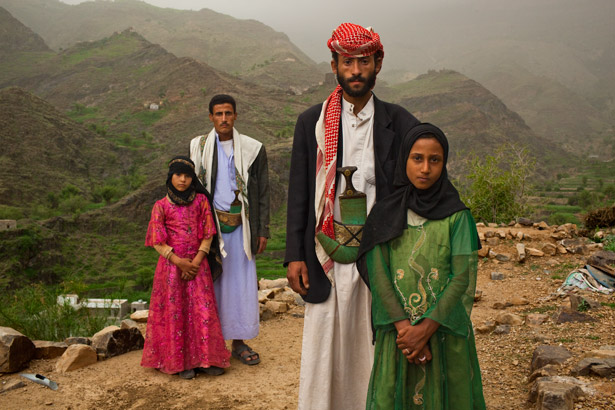
ON WHAT GROUNDS SHOULD WE OPPOSE CHILD MARRIAGES AND THE ADVOCATES OF CHILD MARRIAGE LIKE AHMED SANI YERIMA?


By Idris Oluwadare Aliu


Lately Senator Ahmed Yerima of the Nigerian senate convinced some of his colleagues in the senate into accepting the clause, Section 29, 4 (b) of the 1999 Constitution, into the amended constitution of the Federal Republic of Nigeria.

Section 29(4)(b) 1999 CFRN states: “Any woman who is married shall be deemed to be of full age.”

The 35 Senators of the Federal Republic of Nigeria who endorsed the bill, led by former governor of Zamfara State, Ahmed Yerima, who married a 13 year old Egyptian minor, did this under the guise of religion.This issue has in no small way caused some uproar on the Internet and in the media in general.

Yerima and his colleagues who endorsed the introduction of this clause into the amended Constitution are still been lambasted in the media up til this very hour from some quarters of the media and the country as a whole.

This buzz in the media, the Internet in particular, was what prompted me to put up this article. After going through most of the posts and comments I had come across on this particular issue here on Facebook and on other social media, I could not but ask myself where the whole thing originated from and why? I had to ask myself just where did this limit of 18years, which is the norm today, originate from and why? Other questions that crept my mind were these: On what grounds could we say that the age of 9, 11, 13, or 16 is inherently wrong? Are we (whatever sides we belong to) just defending our side of the debate as part of our culture? These made me ask if people in any particular society would come to accept or defend a concept that had no religious connection or moral justification, simply because they just had to “defend the concept or their culture.”

The truth is that we cannot simply push away the past simply because modern times and ideas see things this way or the other way. We need to provide some historical background to this discourse to facilitate an understanding of different cultures and the clash of civilizations. After all, many of our modern ideas about marriage only evolved during and prior to what is called the “Romantic Period” of history, in the 18th and 19th centuries. That period marked a substantial shift from the prevailing ideas of that time to what we have today.

WAS CHILD-MARRIAGE AGAINST THE NORM BEFORE NOW?
Today in most countries in the West, the minimum age for marriage is 18, although there are places and circumstances where 15 and 16 are allowed. Some countries in the West allow an age as low as 16 (and a few have 15, but only under special circumstances, and require special court approval). In the UK, the youngest age that one can marry is 16, but this requires written parental consent. In the USA in 1880 the State of Delaware’s minimum age for marriage was 7. Most other US states in existence at that time had minimum laws ranging from 8 to 12. In fact, it was not until the 1920s that the age of marriage was “raised” to 14. Child brides as young as 8 years old were also common among the Byzantine and Roman emperors and nobility. The child empress Agnes of France (daughter of the king of France) was the spouse of two emperors of Byzantium, the boy emperor Alexius II Comnenus, and subsequently Andronicus I Comnenus, the latter’s first cousin once removed. According to William of Tyre, Agnes was only 8 on her arrival at Constantinople, while Alexius was 13 as of then. Child brides, whether Byzantines or foreign princesses, were the norm then rather than the exception, especially from the late 12th century. Irene Ducaena, wife of Alexius I Comnenus, was 12 at her marriage, and empress before she was 15; the Byzantine princess Theodora Manuel’s niece, was in her 13th year when she married Baldwin III of Jerusalem; and Margaret-Maria of Hungary married Isaac II Angelus at the age of 9. During the reign of Alexius (24 September 1180 to prior to 24 September 1183) shortly before he (Alexius) completed three years as emperor, Manuel’s first cousin Andronicus made himself co-emperor and then usurped Alexius’s position altogether, putting him out of the way by having him throttled. Nicetas Choniates then, with morbid relish, claims that Andronicus (who was born c. 1118 and was thus 65 years of age) sexually exploited the 11-year old princess. According to Eustathius of Thessalonica, the match was repugnant to her (Agnes), as she regretted Alexius’ death and loathed Andronicus.

Thus, back then amongst the Byzantines and Romans it was customary to import imperial brides from overseas at a young age to enable them to become acquainted with Greek and with their future ceremonial duties; certainly it was unusual under normal circumstances for Byzantine girls to marry before the age of 12. (visit http://www.roman-emperors.org/aggiefran.htm ).

THE POSITION OF ISLAM, CHRISTIANITY, AND JUDAISM ON CHILD-MARRIAGE


To people who are ultra-conservatives (whether Muslims, Christians, or Jews) and who are really concerned about preserving the tradition of marriage, there is no crime in showing support for polygamy, child-marriages, and arranged marriages – in as much as the liberalists and modernists would oppose them.

Indeed, neither the Bible nor the Qur’an makes any over statement on the right marriage age. According to MarcGravell’s statement, “It is usually accepted that Mary (the mother of Jesus Christ) was around 14 when giving birth, and was married at that time.” Historically, it was common then for girls to be married at puberty to older men.

Christian and Jewish conservatives would even let you know that one of the best-known “love stories” in Biblical scripture is about Isaac and Rebekah, a couple in an arranged marriage with Rebekah being a child bride at the time of their marriage. According to the traditional counting cited in the Bible, Isaac was 40years (Genesis 25:20) when he married Rebekah – who was probably 3 years old at the time of the marriage. But according to a second opinion, Rebekah was 14years old at the time of their marriage. [“Torah Insights: Parshat Toldot.” Orthodox Union].

Rashi (a Jewish commentator of the Bible) gave some evidences which strongly suggested that Rebekah was 3 years old girl at the time of her marriage to Isaac. Rashi says it outright in his comment on Genesis 25:20 and seals the deal with some Math:

This is the Math that he uses to support his claim that Rebekah (Rivka) was 3 when she married Isaac (Yitzchak).

1. Sarah was 90 years when Isaac (Yitzchak) was born.
2. Sarah died at 127 immediately after the Akeidah, so Isaac (Yitzchak) was 37 at the Akeidah. (Genesis 23:1)
3. Immediately after Sarah’s death Abraham (Avrohom) hears the news of the birth of Rebekah (Rivka), so she was born when Isaac (Yitzchak) was 37.
4. Isaac (Yitzchak) was 40 when he married Rebekah (Rivka), so she must have been 3 when they married. (Genesis 25:20)

Not everyone would agree with Rashi’s arguement but the truth we will all agree with is that she was an underage girl (whether 3 or 14) when she married Isaac because Biblical references clearly indicated she was still under the custody of a nurse at that time (Genesis 24:59 – 67) and as at then Isaac was 40 years old (Genesis 25:20).

Contemporary Rabbis have however unanimously forbidden such practices (i.e. underage-marriages). Some commentaries, in the Talmud and Sifrei (Jewish scriptures), also indicate Rivka (Rebekah) was 14 at the time of her marriage. Today, it is unacceptable amongst the Jews and Christians for girls to marry at that age, but in historical context it was a reality. This is just one of those differences we see between modern society and ancient society.

Many non-Muslims would want to opine that Islam has a glitch here, in that it needs to accommodate the marriage of Aisha – often taken to be around 9 years old when she married Muhammad, the Prophet of Islam. This they believe makes it rather hard for Islam to make a statement that underage-marriage is inherently wrong. But to those of us who are Muslims, we see no wrong in the Prophet’s marriage because that was the culture back then before the commencement of Islamic laws, and even today in many parts of the world!

Yes, there are Muslim scholars (who mainstream Islamic scholars may identify them as “distortionists”) who refute the claim that Aisha was actually 9 at that time but 18 to 20 years old at the time of her marriage but that’s another discourse open for discussion some other day. If you want to follow their arguement, you can do so by logging onto the following link: http://qa.sunnipath.com/issue_view.asp?HD=7&ID=4604&CATE=1

According to reports in the Nigerian media, Senator Yerima felt the clause to peg marriageable age at 18 is un-Islamic. So he and some of his Muslim colleagues in the Nigerian senate voted and amended it to refer to any girl who is married to be of age.

And that covers the acts of Yerima himself whose under-aged wife at the time of his marriage sparked a lot of outrage. So the question is, what does the Muslim Holy Books, the Qur’an and Ahadith, have to say about this nagging issue?

While the Holy Qur’an is silent about the age, at which a woman can get married, it however states in Qur’an 4 verse 6: ‘And test the orphans [in their abilities] until they reach marriageable age. Then if you perceive in them sound judgement, release their property to them. And do not consume it excessively and quickly, [anticipating] that they will grow up. And whoever, [when acting as guardian], is self-sufficient should refrain [from taking a fee]; and whoever is poor – let him take according to what is acceptable. Then when you release their property to them, bring witnesses upon them. And sufficient is Allah as Accountant’.
Shedding more light on this passage of the Qur’an, journalist and Islamic cleric, Haroon Ishola Balogun says, ‘the inference we can draw here is that there seems to be an affinity between being of marriageable age and the age of mature intellect and sound judgement. Under this verse, four basic conditions of marriage are established in Islam.

These are (1) proposal and acceptance (al-Ijaab wa al-qubuul), (2) approval by both parents (ridaa waalidayn), (3) payment of a dowry by the groom (al-mahr) and (4) the presence of at least two male witnesses at the ceremony (shaahidayn ‘aadilayn).

Even when a minor is given out in marriage by her parents, there is protective solemnisation of marriage where the girl remained untouched until she attains marriageable age according to the Qur’an and at that point; if she decides otherwise; the marriage becomes invalid. So, if a minor whose hand has been given out in marriage upon attaining puberty declines to marry the man, the marriage becomes invalid. That is what the Qur’an means about sound judgment’.

But the truth remains that a 12, 13 or even 14 year old girl is only a child whose judgement cannot be fully considered to be sound neither can she make informed choices at that age. Even if she had reservations about the man, can she truly say no under the circumstances and as a Muslim?


According to Mr. Haroon, "My personal view is not different from what the Qur’an says about marriage. The Qur’an did not specify age, it talks about maturity. If my daughter is mature, yes, I will give her out in marriage. But I must add that although the Prophet got married to Aisha at a tender age of 9, that wasn’t a religious thing. It was more cultural than religious because it was the practice of the Arabs to give out their daughters in marriage early. The Yorubas (Mr. Haroon's ethnic group) don’t give out their daughters in marriage that early but I think I will stick with the Islamic injunctions’.


Furthermore, Islam like Christianity and Judaism has not really prescribed an age limit for marriage. However, the absence of an age limit for marriage should not be taken to mean that a Muslim girl should marry as soon as she reaches the age of puberty through the commencement of menstruation. Such a conclusion is contrary to the Qur’anic teaching which identifies the age of marriage with “rushd”, which is the ability to discern or make sound judgement (Qur’an 4:6). Therefore, a Muslim girl who has attained physical puberty but who is not mentally able to exercise rushd cannot be said to have attained the age of marriage. The personal example of the Prophet with his daughter (Fatimah) also supports this Qur’anic teaching. Fatimah did not marry Ali until 2 years after the Hijrah when she was 20years old. (Salahdeen, I.M. (1987) A Handbook of Islam for West African School Certificate, Agege, Darul-Aftal Nigerian Enterprises pp. 70 - 71).

Muhammad’s marriage to Aisha before puberty may be cited in support of underage-marriage in some quarters but it should be categorically stated that this incident cannot be used in support of underage marriage for some reasons. First, this marriage was borne out of a divine instruction in the Qur’an (Khan, M.M. (1994) Sahih Al-Bukhari (Arabic-English), Riyad, Maktabah Dar-S-Salam publisher and Distributors p. 744). It is a clear case of an exception to the rule. In addition, this incident happened in Mecca before the Hijrah and at least 3 years before the revelation on Islamic laws began; whereas, the marriage of Fatimah to Ali occurred after the Hijrah and commencement of the revelation on Islamic laws. Thus, it can be concluded that the Prophet’s latter practice as was in the case of Fatimah abrogated the former practice. (Uthman, I.O. (1998) The Gender Problem and the Muslim Society, Al-Mubasheer Publications pp. 78 - 79).

But even if we succumb to the idea of this practice of underage marriages not being abrogated in Islam, we need to know that child brides were cultural norms in both Israeli and Arabian cultures. In addition, Josephus tells of several instances where children were married, sometimes for political advantage (Josephus, Antiquities 16.221-228 and 17.12-18; Josephus, Wars 1.555-560).


DO CONSERVATIVE MUSLIM, CHRISTIAN, AND JEWISH SCHOLARS SEE THINGS RELATING TO CHILD-MARRIAGE THE SAME WAY?


Controversial as this may seem, a Saudi conservative scholar and marriage official Dr. Ahmad al-Mu’bi once told Lebanese television viewers that it is permissible for girls as young as 1 to marry – as long as sex is postponed! Al-Mu’bi’s remarkable comments also included an explanation that “there is no minimal age for entering marriage.” “You can have a marriage contract even with a 1-year-old girl, not to mention a girl of 9, 7 or 8,” he said. “But is the girl ready for sex or not?” What is the appropriate age for sex for the first time? This varies according to environment and tradition,” al-Mu’bi said in an interview with LBC-TV.” (Fox News, Wednesday, June 25, 2008).

Controversial as Mu’bi’s statement may seem, Canadian based Christian website www.bible.ca which is a site “critical of Islam” supported his view, it stated: “Today in Saudi Arabia, the home of Islam, child brides as young as one year old are permitted as long as the girl is not consummated until she is older. Notice the language of “marriage contract” is EXACTLY what we see in the Bible.” (See Marriage in the Bible, retrievable from the site through the following link http://www.bible.ca/marriage/ancient-jewish-three-stage-weddings-and-marriage-customs-ceremony-in-the-bible.htm ). But in another place on this particular webpage, the Christian site said “the father of the bride would use his wisdom to look for the best interests of his daughter.” It went on to say, “At this stage, the bride was seen as being completely under her father’s control.” And in another place, it supported its stance with the Biblical verse: “So then both he [father of the bride] who gives his own virgin daughter in marriage does well and he who does not give her in marriage will do better.” (1 Corinthians 7:38). Here we have a website that has articles on its pages accusing Muhammad of being a pedophile and womanizer taking sides with conservative Muslims!

CONCLUSION
Now many of us may object to this practice (of child-marriage) because of the opinions or interpretations we hold but we must also understand that centuries ago and now are quite very different. We must also understand that cultures are also quite very different. Times and culture have changed and so have humans, what we are witnessing today is only but a resurgence of clashes of cultures and clashes of civilizations (Arabian Marriage Culture vs. Modern Marriage Culture, Bible Marriage Culture vs. Modern Marriage Culture, and so on). Bible/Talmud Marriage Culture just like Arabian/Muslim Marriage Culture sets no age limit besides allowing the father to control the marriage of the daughter, although these cultures would let her tell her parents who she wanted to marry. [see 1 Corinthians 7: 38; Rebekah’s case in Genesis 24:33, 24:51-53, 24:57-58; Leah’s case in Genesis 29:15-19; Rachel’s case in Genesis 29:27; Aisha’s case in Sahih Bukhari Volume 5, Book 58, Nos. 234, 236, and Sahih Muslim Book 008, Nos. 3310, 3311). Thus child brides were not considered young girls back then, rather they were considered young women. It is a historic fact that girls from ages of 9 to 14 were being married in Europe, Asia, and Africa, and in fact even in the United States (just more than a century ago), and amongst some members of The Church of Jesus Christ of Latter-day Saints (also called the LDS Church or informally the Mormon Church) in the United States up till this very hour!

N.B.: Please take note that this post is no way intended to support or oppose the practice of child marriage or arranged marriage, or anything else for that matter. This post is only intended to provide some historical background to the discourse in order to facilitate an understanding of some of the functional roles of marriage throughout history and to water down the uproar caused by the Yerima issue here in Nigeria.

Sunday, 30 June 2013

Neem – A Natural Remedy for Hypertension


A very common disease with equal distribution worldwide. It is more commonly known as blood pressure. In general terms blood pressure is that pressure or tension which blood exerts on its arterial wall while flowing through it. Normal value of blood pressure is 120/80 mmHg (systolic /diastolic) accepted worldwide. Term systolic means the pressure in the arteries as the heart contacts and pumps blood into the arteries and diastolic means minimum pressure to which the arteries are exposed.

Blood pressure value varies from person to person and from time to time. Blood pressure between 120/80 to 139/89 mmHg is called pre-hypertension stage i.e. the phase where it is not considered a disease but suggests as a risk factor.


Ayurvedic Treatment For Mild Hypertension:

Ayurvedic herbs, remedies, dietary suggestions and lifestyle management work best with mild hypertension. Every person can benefit from them and can hope to get rid of high blood pressure without taking any conventional medication.

Actually this is the first stage or first warning sign of a disorder that could literally cause havoc and dispose us to fatal conditions. Most people don’t feel any sign or symptom with hypertension that is why it is called ‘silent killer’.

This first stage warrants dietary and lifestyle modification. If we assume that we are able to control slightly raised blood pressure with natural herbs and at the same can indulge in unhealthy living and eating. That is wrong approach that will soon leave us helpless.

So focus your life for positive changes if you are able to notice blood pressure rise in early stage.


Ayurvedic Treatment For Moderate Hypertension:

Usually you must be taking some medication under some medical expert if your blood pressure levels are in this range. Or any doctor will ask you to follow medical regimen. And you should do the same. This will help to settle down the blood pressure level to normal or optimum levels.

Now there are two roads – one road leads to more and more drugs and despite that your blood pressure will rise with age and you will end up with more medication and their side effects.

The second road might lead you to freedom from raised blood pressure and resulting grave disorders. But, and it is a great but, here your commitment should be business like if you want to normalize blood pressure.

The practical advice is to follow ayurvedic remedies and lifestyle along with modern drugs. Your doctor should be aware of this option so that if you would be having improvement, he could adjust your drugs.

Most of ayurvedic or herbal remedies don’t have any serious side effects or drug interactions. There is almost never any life threatening incidence.


Ayurveda's Preventive Approach For High Blood Pressure:

This is the really preventive and beautiful aspect of Ayurveda. If you feel that you have many risk factors of hypertension – smoking, fatty foods, obesity, sedentary habits, family history and like – you should proactively bring about positive changes in your life.

You can also proactively use ayurvedic herbal remedies to keep away high blood pressure from you. Ideally by making healthier adjustment, one can keep away high blood pressure or can realistically hope to be free from severe hypertension.


Neem Tea For Hypertension / High Blood Pressure

There have been several studies examining the effect of neem leaves and neem leaf ingredients on blood pressure, blood clots and cholesterol levels. (Please note that most such studies are done on animals, not people).

Some of the studies showed positive results on high blood pressure. It is not clear if those results are due to a calming effect as seen in other herbal teas, or if it is due to a dilation of the blood vessels as observed for some neem ingredients.

The fact that intravenous application of a certain neem leaf extract has shown a significant drop in blood pressure, does not mean that neem tea is a wonder cure. It may be of benefit, but it certainly does not eliminate the need to make lifestyle changes. Neem tea will not eliminate the need to get off the lounge and get moving.

Often people who are struggling with high blood pressure are taking medication. Neem leaves and neem tea contain active substances that may interact with that medication. Anybody who is on any medication should talk to their doctor before starting any self experiments.

Neem tea is made like other herbal teas, by pouring hot water over the leaves and letting them steep. It is extremely bitter.

If you feel you would like to try neem tea, we suggest you do so carefully and closely observe your reaction to it. Let common sense rule and do not expect miracles. If used sensibly, neem tea may benefit you.

Credit: http://www.productosdeneem.com/neem-hipertension2.htm

Friday, 28 June 2013

DON'T LET KIDNEY FAILURE KILL YOU: Caring for Kidneys


Here are several science-supported methods of caring for your kidneys and reducing your risk of kidney disease:

1.Avoid smoking and excessive consumption of alcohol and caffeine.

2.Maintain normal blood pressure and blood sugar levels.

3.Keep your cholesterol in check.

4.Drink plenty of water (at least eight glasses daily).

5.Stay at a healthy weight.

Tuesday, 11 June 2013

THINGS YOU DIDN'T KNOW ABOUT THOSE COMMISSIONED INTO THE NIGERIAN ARMY!


There are 5 types of commission in the Nigerian Army (NA) - Not Armed Forces. They are:

1. Regular Combatant (RC). Training takes 5 years.
2. Short Service Combatant (SSC). Training takes 6 - 9 months.
3. Direct Regular Combatant (DRC). Now attained on conversion from DSSC.
4. Direct Short Service Combatant (DSSC). Training takes 6 - 9 months.
5. Executive Commission (EC). Training takes 2 - 3 months.

Details of such commissions are to be found in the Harmonised Terms and Conditions of
Service (TACOS) for officers of the Nigerian Armed Forces but a summary goes thus:

RC and SSC are combatants, trained to fight battles. Others are not meant to be combatants.
Both SSC and DSSC are of relatively short durations (not more than 12 years I think,
excluding extension of service) and must convert to RC and DRC respectively to enjoy a
longer career. Theoretically, RCs and DRCs can rise to become generals ie Brigadier Generals,
Major Generals etc. (Remember the pyramid structure? The higher it gets, the smaller it
becomes. In other words, many are called but only a few are chosen). DRCs are mainly
professionals - surgeons, pharmacists, chaplains, surveyors etc. - and are usually not found
in the core combat arms of Infantry, Armour and Artillery but are be found in the Army Engineers
and Signals. ECs are made up of former soldiers and do not usually exceed the rank of Major.

There are varying criteria for the various commissions. In reality the advantage is more on
the side of those who were originally RCs than those who were originally SSCs in terms of age,
rank, numbers etc. However, anything can happen, for instance Lt. Gen. Ishaya Bamaiyi (rtd.)
rose to become Chief of Army Staff (COAS) even though he wasn't originally an RC.

Although DRCs may never become COASs or General Officers Commanding (GOCs), they can apart from
being Staff Officers also hold command posts in corps or services in which they predominate.
These include Education, Medical and Finance among others.

Life in the Army here in Nigeria can be promising, particularly now that efforts have been made
to consolidate emoluments but achievement of success or wealth in the Army (here in Nigeria as well
as is in other countries) is a product of motivation and determination. If you want to live well,
you will. If you don't, you won't. The choice is really yours!


For RC or DRC, mininum years of service is about 15 years and life as a cadet can be quite strenuous.
Generally, training is in the Infantry Corps Centre and School (ICCS), Jaji, Kaduna State. As for the
DSSs and ECs, their training is usually less strenuous, not as in NDA where RCs and SSCs are trained.
Cadets are usually humourously welcomed with the euphemism, "Unfortunate Nigerians, you will nearly die
but you will not die!" But you should survive if you are physically fit afterall, many have gone before
you. As a cadet, you are entitled to allowances which may not really cater for your family if you have one but could go a long way to help you sustain yourself.

If you wish to obtain more information on the Nigerian Army and the types of application forms available,
you can check with the Army Public Relations Department in any military barracks near you. For RC, you
need at least 5 credits including English and Mathematics. For SSC, DRC and DSSC, you must be a
graduate. Lawyers in the army are usually found in the Army Legal Services and the Military Police.
They can also be found in lesser numbers in other corps and services. As for your private practice,
it all depends on what type but you won't be expected to have your private practice as a lawyer alongside your military career.

Lastly, it is also noteworthy to say that the Nigerian Defence Academy (NDA) now offers some post-graduate
courses for those in the military as well as for those not in the military.


Monday, 27 May 2013

RELATIONSHIP TIPS: here are more than one ways the man in your life can torture you


Love him or hate him, but you can’t ignore him – yes, we are talking about the man of your life. He’s probably the most loving creature in your life, but he can also be the perpetual torture in ways more than one.
Black Couple Issues
Here, we bring the top 10 cruel things that men do to women …

1. Having the biggest ego: Ever wondered why men hate taking directions and prefer hunting out the place on their own, even if it means 2 hours delay and waste of gas. Well, the answer is the big ego they walk around with. This was the pettiest exemplar of a man’s ego, which gets hurt at the drop of the hat and needs a massage whenever possible.

2. Living with a ‘selective memory’: They’ll not only remember the name of every cricketer and football player on the planet but will also know their scores by heart. But, the moment the deal is about remembering birthdays and anniversaries of people close to them, their brain suffers an ailment called ‘selective memory syndrome’.

3. Ogling (read at breasts): ’Men do stare at women’s breasts’ has been stamped as official by a world wide survey. But how we wish they knew that their drooling at the sight of a well endowed woman is cruel not only to the victim of that gaze, but also to the woman sitting beside them. Yes, they don’t miss any chance, even if it is when they are on a date!

4. Being overtly possessive: Where in the world did men get that insecurity from? (Their mother? )They blame women for being jealous but a mere mention of another man from their girl can turn them into an ever clinging magnet.

5. Taking pride in their hypocrisy: Men can’t get more cruel than this! They love hanging around with the coolest and sexiest babe in the town, but when it comes to meeting mom, it’s a ‘homely’ girl they start hunting for. You loved her dressing style and carefree attitude when she came for night-outs with you, what’s with that marriage material hunt now?

6. Showing extra care: How does it feel to take his ’where-about’ calls every 15 minutes after you step out of the home? The care in that gesture goes out of the window and irritation takes charge. Don’t they realise that we lived safe, sound and perfectly well in this world before they came into our lives. Hope someone is listening.

7. Throwing their ‘superman’ self everywhere: Yes, it feels nice when men are around for some help. However, their ‘I-can-do-everything-under-the-sun’ attitude does more harm than good, especially when they think themselves to be exalted beings – a plumber, electrician, carpenter and a financial adviser all rolled into one.

8. Consider emotions to be crap: Women might be emotional but having a constant practical point of view, like men doesn’t, score well always. Men will become better beings for sure, if they stop making fun of sentiments and ignoring them as useless.

9. Being the friend worshippers: It is very torturing for women when men don’t learn to priorities their life post marriage. They blame her for being a clinging vine when she asks for his time, but how sane is it to have a bunch of friends in the backseat on a long-drive, which was planned to be a romantic one?

10. Being the sex monster: Undoubtedly, women love zest in bed, but it’s very cruel of men to demand their partners to play the porn star they saw in that flick last night. It’s better to let her be herself in a sexapade rather than putting her in an uncomfy situation and then blaming her for being non-cooperative.

source: times of india

Sunday, 19 May 2013

The bee venom as HIV, cancer cure


By Ebele Orakpo On May 18, 2013

If reports from the researches of a team of medical practitioners at the Washington University School of Medicine, USA, and the testimony of an Ibadan-based apitherapist are anything to go by, perhaps the world should get ready to heave a sigh of relief from AIDS and cancer.

Unlike most other ailments where the bodyfs defence apparatus fights foreign objects thereby protecting the body, in the case of HIV, it attacks the soldiers, the T-helper lymphocytes, also called CD4 or T4 cells. Noted Wikipedia Free Encyclopedia; gThese are white blood cells that are essential part of the human immune system. They are called helper cells because one of their main roles is to send signals to other types of immune cells, including CD8 killer cells.

T4 cells send the signal and CD8 cells destroy and kill the infection or virus. But as a popular Igbo adage says, when the lion is incapacitated, the antelope visits to settle old scores, so if CD4 cells become depleted, as is the case in untreated HIV infection, or immune suppression, the body is left vulnerable to a wide range of infections that it would otherwise have been able to fight.

Following the report of the US-based medical scientists (Hood J.L, Jallouk A.P, Campbell N, Ratner L and Wickline S.A) that a toxin (melittin) found in bee venom could destroy HIV and tumor cells without harming nearby cells, there have been varied reactions from the public. Some described it as a miracle, others were skeptical while a few said it was impossible. Sunday Vanguard sought opinions of experts.

Bee venom as a weapon:
Engr. Ayodele Salako, an Ibadan-based apiculturist/apitherapist, said although most orthodox medicine practitioners do not believe in alternative medicine, the answer to most diseases of man lies with nature and, unless we go closer to nature, we will not discover its many wonders.Bee-venom

He added, gHoney bee venom , also called apitoxin, is one of the major products of the bees and they use it to defend themselves, the queen bee and their territory, it is their weapon. Also God has put something in the bee venom for healing so once a bee stings you, 45 minutes or one hour later, it dies and that venom, within your body system, begins to do a lot of wonders. The introduction of that venom through the stinger into your system may cause some pains and that pain is the pain that kills pains, he said.

Bee venom therapy (BVT):
Salako reeled out a number of ailments that could be combated with bee venom which include headache, insomnia, osteoarthritis, fractures, inflammation, high blood pressure, skin problems, back pain, infertility in women, eye problems, wounds that have refused to go for about two-three years. gThe best remedy for arthritis is Bee Venon Therapy, BVT,h he stated.

Mr. Ndubuisi Okwum , a staff of Scripture Union, Nigeria, echoed Salako’s view. He said: gI learnt a bit of apiculture at Umudike, Abia State and since the 90s, I have known that bee sting can cure malaria (apipuncture), so I am not surprised at this recent research development.

Mr. Harry Porter , reacting to the story, HIV, cancer: Bee venom to the rescue on Vanguard website, said; gThis is what we call nature signature. This is the suggestion of what a fruit or leaf or animal or insect can cure by looking at its structure and what it resembles. Taking a good look at bees, you can see that the comb resembles a DNA structure and a virus. So itfs a great possibility that the cure for HIV can come from it. More research is needed to get a pure sample that will do this without rendering the surrounding cells useless or dead.

If you have a severe headache and I administer BVT via a bee sting, there will be quick relief. As an apitherapist, I studied body anatomy so I know at what points to apply the bee sting so that the venom can be carried through the required route to the targeted site. If you complain of insomnia and I give you BVT, within 20 minutes, you will sleep off,” said Salako, noting that “a farmer who goes to the farm and is being stung by bees will not fall ill easily. He is free from having fever regularly, free from insomnia, high blood pressure, skin problems, eye problem, back pain, HIV etc. Bee venom is very powerful against many ailments.”

Bee venom against HIV
Salako, who claims to have been treating HIV-positive people with bee venom, said; gI have used bee venom to treat some HIV positive patients. I say it on live broadcast but many people donft believe it. If Vanguard can just look for one confirmed HIV-positive patient, they should send him/her to me. After 8 ? 12 weeks of treatment, the person will go for another test. Usually, after the first 8-12 weeks of treatment, he will notice a decrease in the viral load. Then we continue the treatment for another 4-5 weeks and the patient goes for another test until there is no more AIDS virus in the system. Apart from the BVT, I also apply other bee products like propolis with honey. 

The researchers had said that gbee venom contains a potent toxin called melittin that can poke holes in the protective envelope that surrounds HIV and other viruses. It has even shown melittin-loaded nanoparticles to be effective in killing tumor cells.h

Asked if any kind of bee could be used for BVT, Salako replied in the negative saying; gThe female bees are the only ones that can sting so only female bees are used in BVT.

The male bees are called drones; the mature female bees are called queens which lay the eggs. The drones cannot sting; their main function is to fertilize the virgin queen during her mating flight after which they die.

Extinction of bees:
Some people argue that if the anti-HIV./cancer activities of bee venom proves to be true, then bees may become extinct sooner than later but Salako allayed this fear saying that a queen can lay about 2,500 ? 3,000 eggs per day, adding that it will rather create the much needed job for the youths.

Credit: http://www.vanguardngr.com/2013/05/the-bee-venom-as-hiv-cancer-cure/

Tuesday, 30 April 2013

5 Features That Black Women Have, That White Women Pay For


Black women have features that other women pay thousands for.

Originally written by Amanda Anderson on the 11th of October, 2010

As the media continues to push down its played and tired agenda of European beauty as the superior form of beauty, African American women are forced to either challenge it or succumb to it, and accept our place of inferiority. Sadly, most black women have obliged to the standards of a hate infested media, and are taking many routes to look more European. We’re destroying our natural and God given hair because they said our hair isn’t beautiful, lightening our skin since they believe lighter skin is better, and opting for smaller noses since apparently ours are “too wide.” We keep giving in to their lies and we hate our God created selves. All the while, the features that whites claimed were ugly and unattractive are secretly the most desired, and the reason behind a billion dollar industry of plastic surgery and cosmetics.

We were originally hated because of our skin, lips, and curvy physiques; and now Caucasians are willing to spend thousands for tans, full lips, and new asses.

Sometimes it’s as if whites secretly love and appreciate our God given features more than most of us do.

Need an ego boost or a few reasons to appreciate what you have, naturally? Here are five features you were born with that white women would pay for.

1. Your Skin Color

Our darker skin color has always been cited as the number one reason we are one of the most hated people on the face of the earth. While most say it’s out of intimidation and ignorance; I’m convinced that the increasing popularity of tanning practices and procedures proves that it’s actually just a bad case of jealousy.

White women spend hundreds of dollars a year on tanning products and tanning salons. You’re naturally blessed with melanin, and your skin looks like it’s been kissed by the skin without any alteration.

2. Your Butt

Most black women have been blessed with some junk in their trunk, and it’s refreshing compared to women who are known to lack plenty back there. Since a little booty is all the range now in Hollywood, with celebrities from A-List to the Z-List buying booty pads or new asses all together, it’s no surprise that regular white women are spending thousands on butt injections. Unfortunately for them, their purchased fixations aren’t completely fixed; they’ll continue to spend thousands to keep up the shenanigans. Meanwhile, you were born with a bubbly derriere.

3. Full Lips

White women aren’t known to have fuller lips, and have to depend on lip pumpers and lipsticks, and even lip injections to get a full set of luscious lips. Our lips are so in right now, that most of the lip sticks and glosses on the cosmetic scene claim to have lip pluming formulas.

Clearly we have gorgeous, kissable lips that cost quite a penny for the less equipped.

4. Hair

Oh yes, you’re not tripping, your natural, coily, full, thick hair is desirable to white women.

Not convinced? Well why do you think they spend so much money on curly perms in the hair salon? They desire a thick head of curls, and you yourself have been born with that. Unfortunately, if you have a relaxer, you’ve opted for straight and thinner hair.

As a natural diva myself, I can tell you that when I wear my natural coily, thick hair out in public, most of the compliments I get on my hair come from whites. They even ask how they can get curly, thick hair like mine.

Your natural hair is way more fabulous than that relaxed hair you’ve been rocking for over a decade. In fact, it’s guaranteed to turn more heads and create more admirers. Be proud of it.

5. Your Ageless Skin

Smooth as silk, and slow to crack; there probably isn’t a woman alive who wouldn’t want our skin.

Black people as a whole, age pretty damn good. My mother is in her mid 50s, and her skin is flawless, and wrinkle free. No offense to my white sisters, but they start to see facial lines before they even hit their mid 30s. They rely on expensive skin care products, botox, and outrageous beauty routines to have the skin we have naturally.

Now this is by no way or means a diss to Caucasians, but a wake up call to all of my mocha sisters about the natural beauty that we’ve been blessed with, but rarely appreciate. When most of us think of our features, we’ve allowed the media to plant seeds of self-hate so deep in our consciousness that we subconsciously attempt to change the things about ourselves that are representation of our ethnicity. Why should we continue to allow anyone else to define what beauty is, when God himself decided that what He gave us would be good enough. Are we that pompous to question God’s decisions?

It’s a new day, and it’s about time we love every little detail about ourselves. After all, it’s all God given. And if people are willing to fork out thousands to get what we already have, we must be kind of fabulous.

Update: I wrote this two years ago and it’s still making non black people angry. Why can’t I praise black women? Oh that’s right, because that’s not what this country is used to. When I do it, it’s racist. I wrote this to also prove that there’s a superiority complex that some of you have against black women. Point proven! But the shunning of black women happens everyday on those mainstream magazines that only feature white women, but that’s okay? Please. If you’re offended by this article, sorry, that’s too bad. Now you see why it’s never cool for beauty to be one sided or limited to one race. Rarely are African American women EVER praised for our features. I set out to do this with this article because I never see anything positive about OUR features. For too long, the European standard of beauty has been pushed down our throats and we are expected to look and meet those standards. And just like I expected, the people who are supposed to be that standard are angry about what I have written. Tough cookies.

You proved that due to your anger from an article that never made any racist remarks to white women, that we have a long way to go. But you’re the same people that refer to black magazines as racist, while praising Vogue for its hundreds of glossy pages full of white models. Frankly put, you’re mad because black women were praised..for once! Grow up. And there’s not an angry comment that can change how I feel or the facts regarding the double standard of European “beauty.” Hit that “X” in the corner of your screen and be on your way if you have a problem with me finally praising the beauty of women who don’t meet that tired European standard of beauty. I love being a black woman, and it felt good to put the shoe on the other foot. Stay mad!

Via Urban Belle Mag